
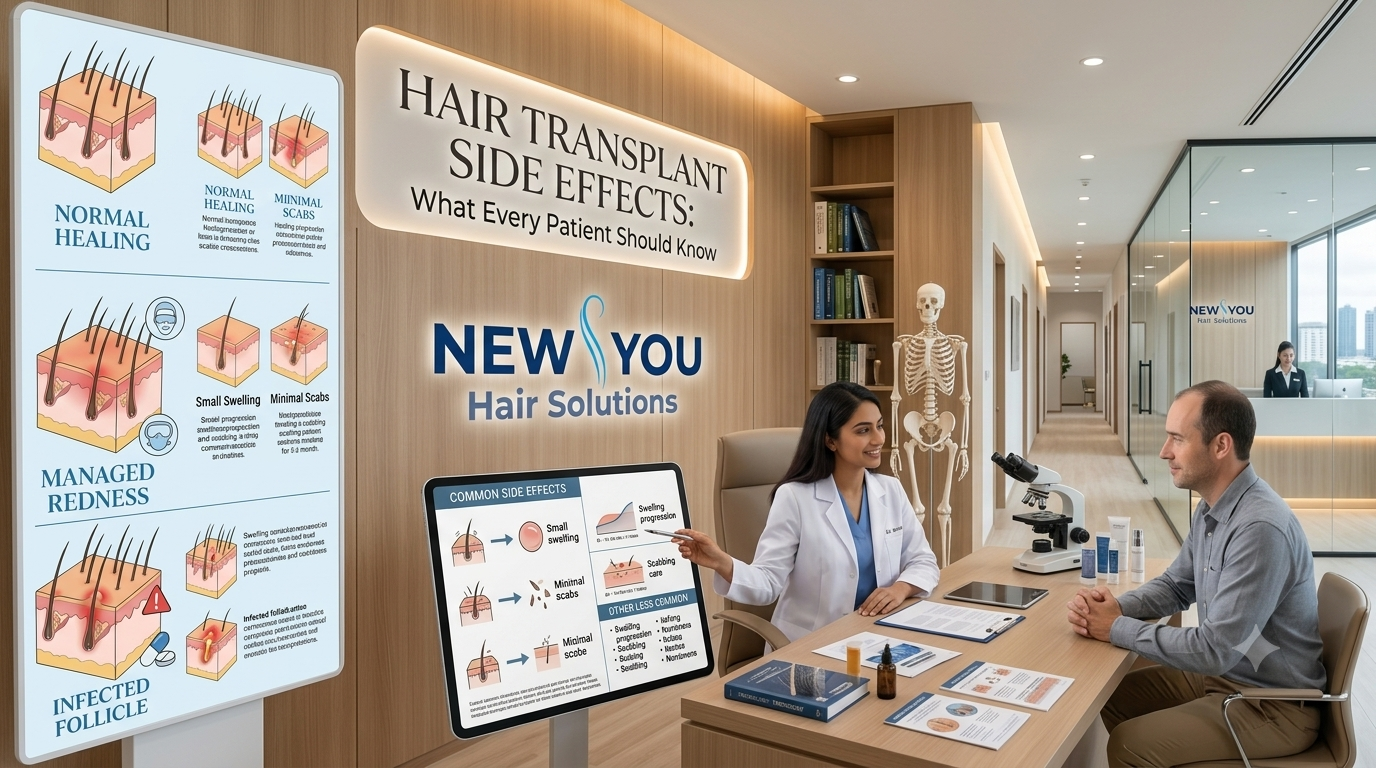
Welcome to our blog dedicated to providing comprehensive information on the topic of Hair Transplant Side Effects. Deciding to undergo hair restoration is a significant step toward reclaiming your confidence. However, like any surgical procedure, it’s crucial to understand the full journey, including the potential side effects and risks.
Our goal is not to discourage you, but to empower you with the knowledge needed to set realistic expectations and ensure a smooth, well-managed recovery.
Understanding Hair Transplant Side Effects: A Patient’s Guide
Hair transplantation—whether via Follicular Unit Extraction (FUE) or Follicular Unit Transplantation (FUT)—is a highly effective and generally safe solution for hair loss. The vast majority of patients experience positive outcomes with minimal complications.
That said, the scalp is a sensitive area with a rich blood supply and intricate network of nerves. When you redistribute thousands of hair follicles, your body will respond. This response manifests as side effects.
We categorize these side effects into three groups: Common and Temporary, Manageable, and Rare but Serious.
Part 1: Common and Temporary Side Effects
These are the effects that nearly every patient will experience to some degree. They are a normal part of the healing process and typically resolve on their own within a few days to a few weeks.
1. Swelling (Facial Oedema)
This is perhaps the most common post-operative effect. Swelling usually peaks 2 to 3 days after the surgery and can affect the forehead, the area around the eyes, and even the cheeks. It occurs as the body responds to the trauma of the incisions and the fluids injected during anesthesia.
2. Itching
As the tiny incisions heal, scabs form. The dryness of the healing skin, combined with the scabs, triggers itching. Additionally, as tiny nerve endings regenerate, they can cause itching sensations. It peaks around day 7 to 10.
3. Mild Pain or Discomfort
Some tenderness, tightness, or mild pain is normal in both the donor (where hair was taken) and recipient (where hair was placed) areas once the anesthesia wears off. It is usually easily managed with over-the-counter pain relievers or prescribed medication.
Part 2: Manageable Side Effects
These effects require a bit more active care and attention but are still common and well-understood by surgeons.
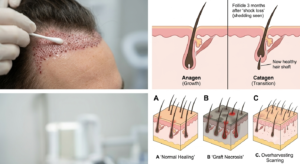
4. Shock Loss (Temporary Hair Shedding)
This can be an alarming side effect, but it is entirely temporary. “Shock loss” is the shedding of existing hair near the transplanted area, or even the newly transplanted hair itself. It happens because the trauma of surgery shocks the surrounding hair follicles into a resting phase.
5. Crusting and Scabbing
Tiny scabs will form around each graft. They are essential for protecting the new follicles, but they need to be managed. If they become too thick or are prematurely scratched off, it can damage the grafts. Doctors usually provide specific washing instructions to help gently loosen and remove them over 7-10 days.
6. Numbness or Altered Sensation
Numbness, tingling, or a “crawling” sensation on the scalp is common. It occurs because the tiny nerves in the scalp are disturbed during the procedure. Sensation usually returns gradually over several weeks to a few months.
Part 3: Rare but Serious Complications
These are the risks that emphasize why choosing a highly skilled, experienced surgeon is paramount. Serious complications are rare but require immediate medical attention.
7. Infection
Infection is rare but possible if the surgical area is exposed to bacteria or dirt during the early healing phase. Signs include persistent redness, increasing pain, swelling that does not subside after 4 days, pus or discharge from the incisions, and fever.
8. Excessive Scarring
Some scarring is inherent to both FUE (tiny dot scars) and FUT (a linear scar). However, if a surgeon removes too many follicles (overharvesting) or makes incisions too large or too close together, visible, aesthetically displeasing scars can result. Keloid or hypertrophic scarring is extremely rare.
9. Poor Graft Survival
If grafts are handled poorly, kept out of the body too long, or placed into a scalp with compromised blood supply (scalp necrosis), they may not survive. This leads to poor density and unsatisfactory results.
How to Manage Side Effects and When to Worry
Most side effects are temporary and easily manageable. Here is a quick reference guide:
| Side Effect | Typical Duration | How to Manage | When to Seek Medical Attention |
| Swelling | 3-7 Days | Sleep with head elevated (45°), use cold compresses on forehead (not on grafts). | If swelling remains severe or spreads below the cheeks after 4 days. |
| Itching | 1-2 Weeks | Use provided saline spray, gentle washing. AVOID SCRATCHING. | If itching is persistent, extreme, and leads to raw skin or bleeding. |
| Shock Loss | Shedding 2-8 Weeks | Be patient. Regrowth begins around month 4. | If the shedding continues indefinitely, which might suggest a different underlying condition. |
| Numbness | Weeks to Months | Reassurance. Sensation will gradually return. | If numbness persists beyond a year without any sign of improvement. |
| Redness | Days to Weeks | Protect from direct sunlight. Wear a loose-fitting hat (as advised). | If redness increases after the first few days or is accompanied by warmth and pain. |
When to Call Your Surgeon Immediately:
-
Signs of infection: Pus, discharge, worsening pain, increasing swelling after day 4, high fever.
-
Persistent bleeding that won’t stop with gentle pressure.
-
Any sign of tissue darkening or “black spots” on the scalp (potential scalp necrosis).
By understanding these side effects and following your surgeon’s aftercare instructions diligently, you can ensure the best possible experience and a successful, transforming outcome. Your journey to a new head of hair is a marathon, not a sprint—and managing the initial miles of recovery is key.